
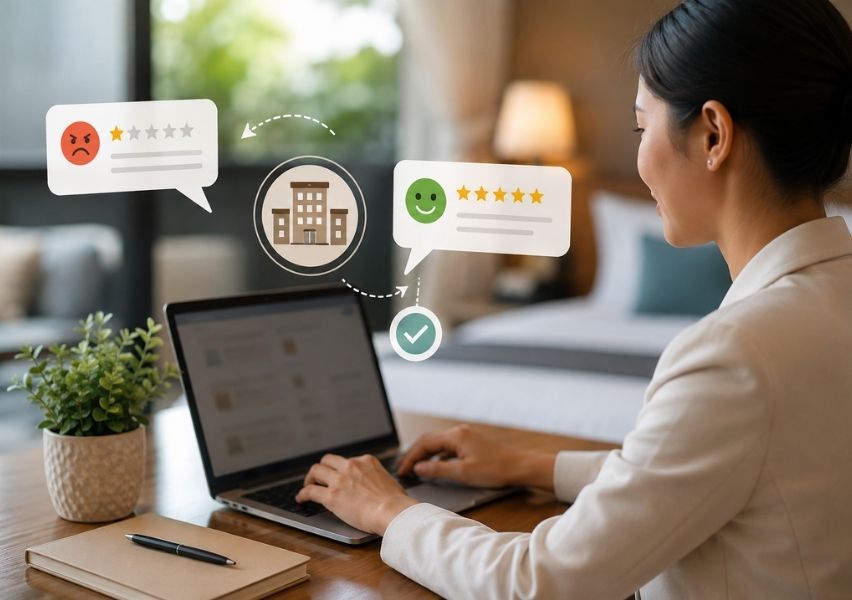
Receiving a negative review on OTA platforms such as Airbnb, bookingcom, or Agoda is never a pleasant experience for villa owners. This can be especially concerning when the review appears during a high-occupancy period or while you are working to build your property’s reputation.
However, one or two negative reviews do not necessarily mean that your business will lose the trust of potential guests. In fact, guests do not only pay attention to the review itself. They also look at how the property responds to criticism.
A professional response can show that the villa is well-managed, open to feedback, and genuinely committed to providing a good guest experience.
For a villa management company in Bali, the ability to handle negative reviews is an important part of maintaining an online reputation. In the hospitality industry, digital reputation can often influence a potential guest’s decision before making a reservation.
Why Are Negative Reviews Not Always a Bad Thing?
Many villa owners panic when they receive a three-star or even one-star review. However, consumer behavior suggests that most potential guests do not necessarily expect a property to have a perfect rating without any criticism at all.
What they want to know is:
Are guest complaints handled properly?
Does the management provide a solution?
Was the problem an isolated incident or does it happen repeatedly?
Do recent reviews show that improvements have been made?
In other words, your response can sometimes have a greater impact than the negative review itself.
1. Don't Respond While You're Emotional
Reading criticism can be frustrating, especially when you feel that the complaint is not entirely accurate. However, avoid responding to a review while you are still emotional.
Take some time to:
Check the chronology of the incident.
Discuss the situation with the staff involved.
Verify the facts before responding.
A calm and thoughtful response will always appear more professional than a defensive one.
2. Thank the Guest for Their Feedback
A simple thank-you can make a significant difference. For example:
"Thank you for taking the time to share your review and feedback about your stay with us."
Starting your response this way shows that you value every guest, even when they are sharing criticism.
3. Acknowledge Any Genuine Issues
If the guest's complaint is valid, avoid making excuses or trying to justify the situation.
For example:
The check-in process was delayed.
The hot water was temporarily unavailable.
The room cleanliness did not meet the expected standard.
Acknowledging a mistake does not necessarily damage your business reputation. Instead, it demonstrates accountability and a commitment to improving your service.
4. Explain the Improvements You Have Made
Potential guests want to know whether the reported issue still exists or has already been resolved.
For example:
"We have reviewed the matter with our housekeeping team and updated our room inspection procedures before the next guest's check-in."
A response like this reassures potential guests that the complaint has been taken seriously and followed up with concrete action.
5. Avoid Arguing with Guests
Even if you have evidence that part of the review is inaccurate, the review section should not become a place to argue with guests.
Responses such as these should be avoided:
"That was not our fault."
"No other guests have ever complained."
"You misunderstood the situation."
A defensive response can make potential guests question the professionalism of the property management.
6. Use Polite and Personal Language
Avoid using exactly the same template for every review. Mention specific details from the guest's experience so that your response feels more personal.
For example:
"We sincerely apologize that the air conditioning in your room did not work optimally during your stay."
A response like this shows that you have actually read and understood the guest's feedback.
7. Use Reviews as Operational Feedback
Negative reviews can be a valuable source of information for improving your operations.
Pay attention to whether similar complaints appear repeatedly, such as:
Room cleanliness
Wi-Fi quality
Breakfast
Check-in process
Staff responsiveness
Facility conditions
If the same issues continue to appear, it may indicate that certain operational areas need to be improved.
A professional villa management company in Bali will typically review guest feedback regularly to improve service quality and prevent the same problems from happening again.
8. Encourage Satisfied Guests to Leave Reviews
One of the best ways to reduce the impact of negative reviews is to build a stronger collection of positive reviews.
However, avoid asking guests for reviews too aggressively. Good opportunities to ask for feedback include:
After a guest tells you they are satisfied with their stay.
When the check-out process has gone smoothly.
Through a short message a few hours after the guest has left the villa.
The more recent positive reviews your property receives, the less impact a single negative review may have on how potential guests perceive your property.
The Role of Villa Management Bali in Maintaining an Online Reputation
Maintaining a strong digital reputation requires consistent attention. This includes monitoring new reviews, responding to guest feedback promptly, and evaluating the reasons behind recurring complaints.
As a villa management company in Bali, The Loka Management does more than manage reservations and daily operations. We also support online reputation management through professional review responses, coordination with operational teams, and continuous evaluation of the guest experience.
This approach helps villa owners build trust with potential guests while increasing the opportunity to consistently receive positive reviews.